
ARTWORK DETAILS
David Aston
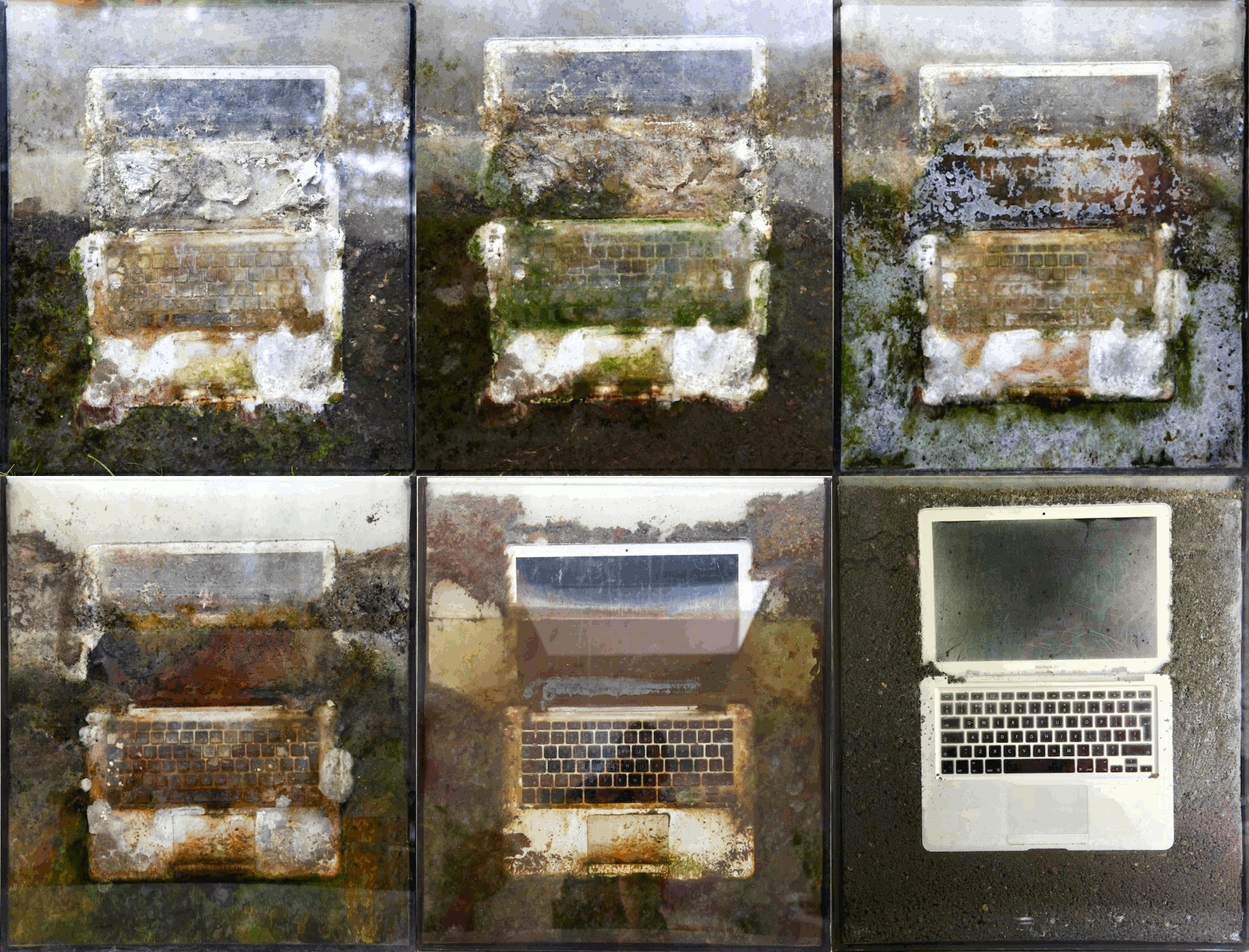
Pergamon II
MacBook Air, glass, soil, moss, seeds, time
24 H x 21 W x 1.25 in
4 August 2018
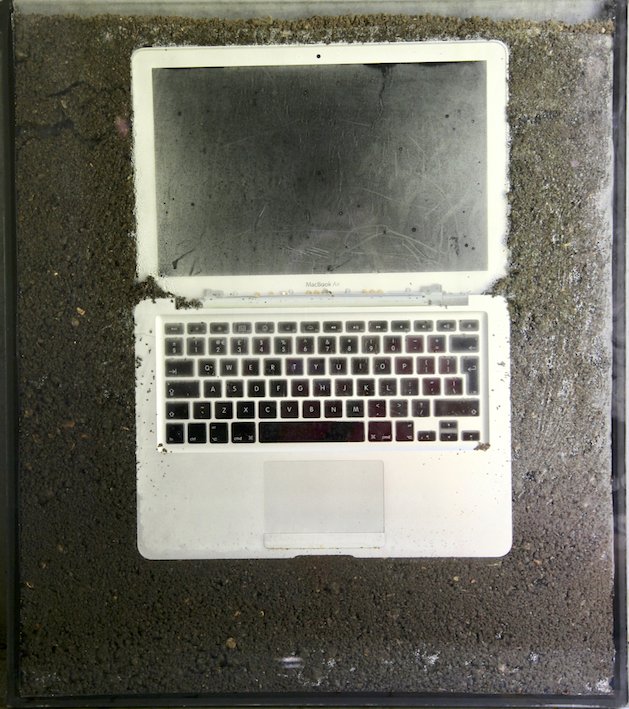
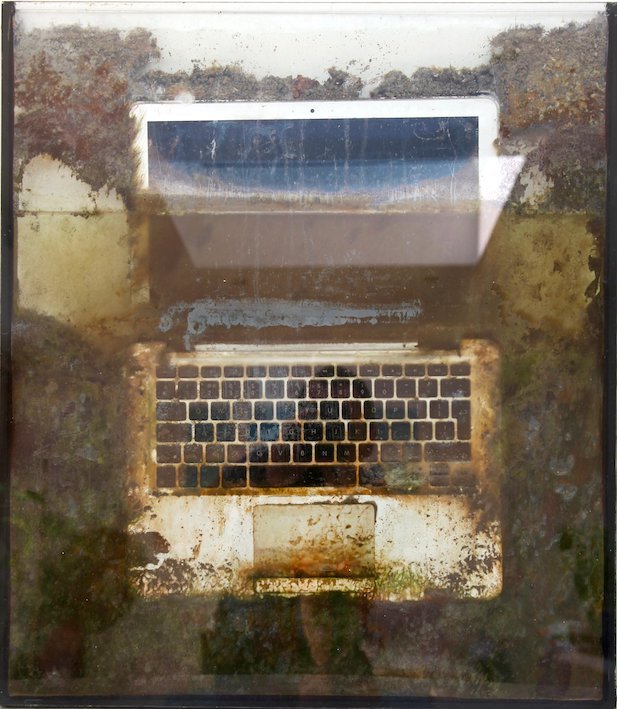
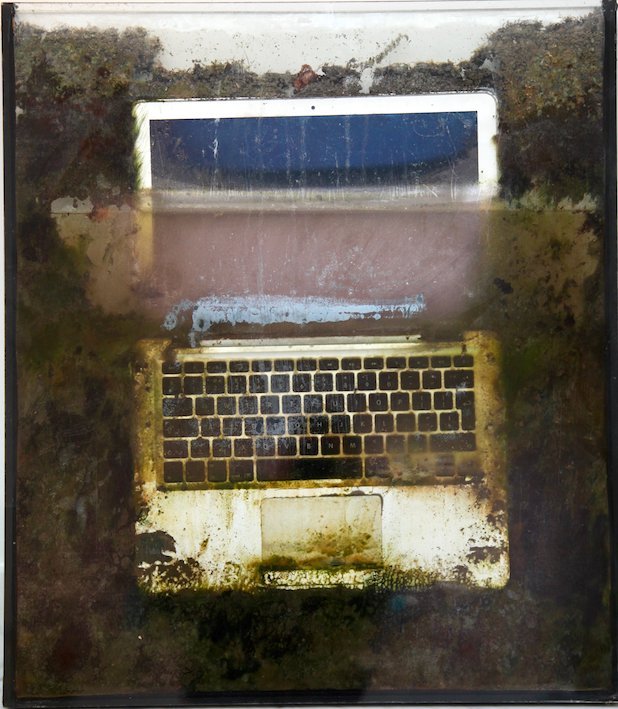
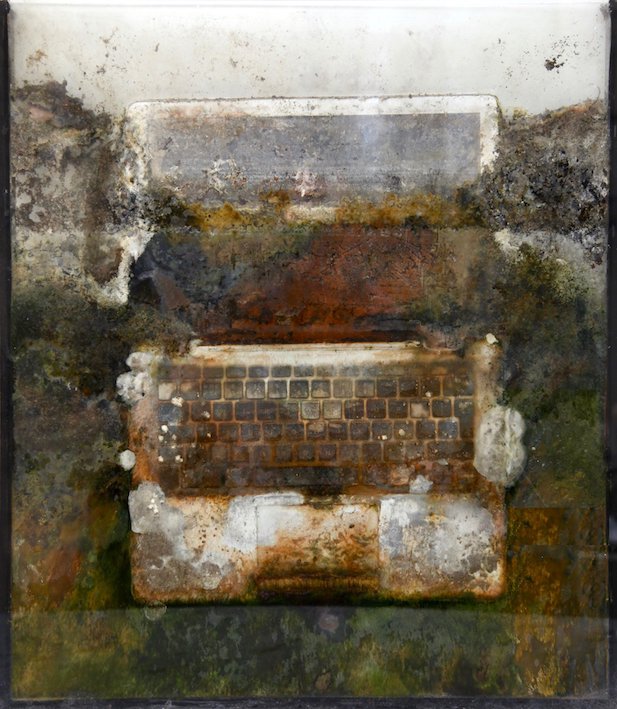
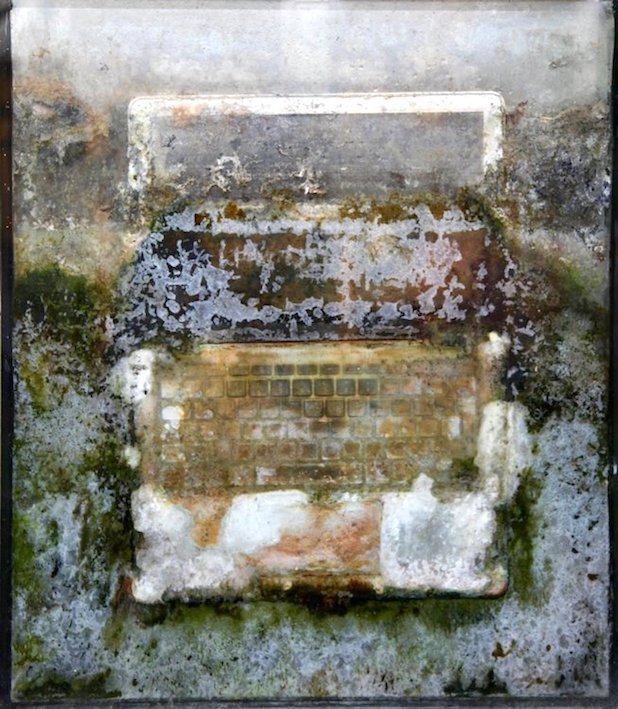
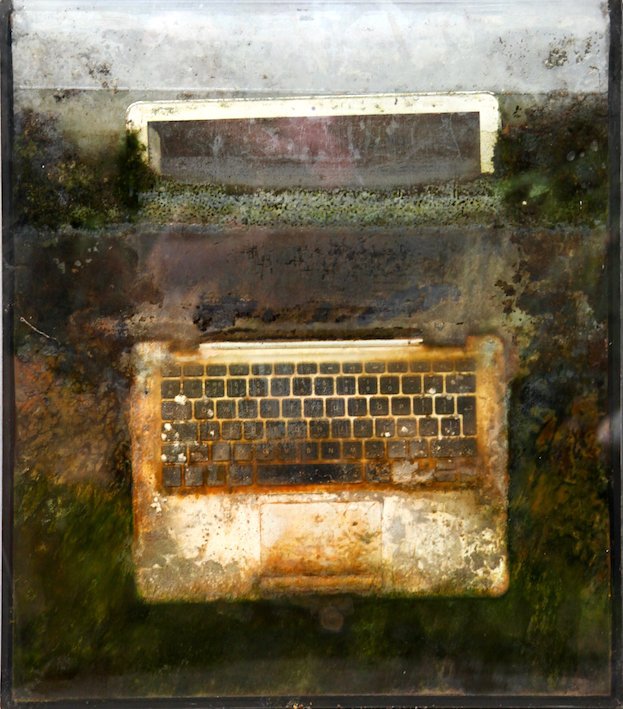
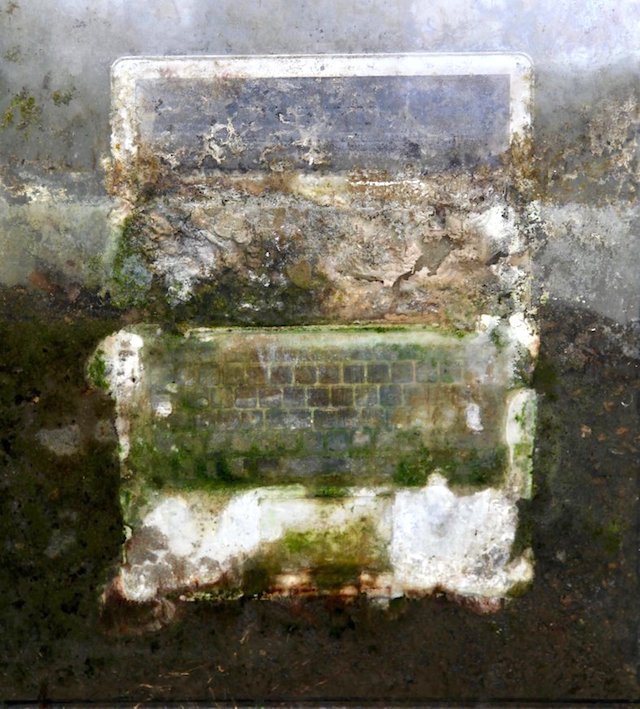
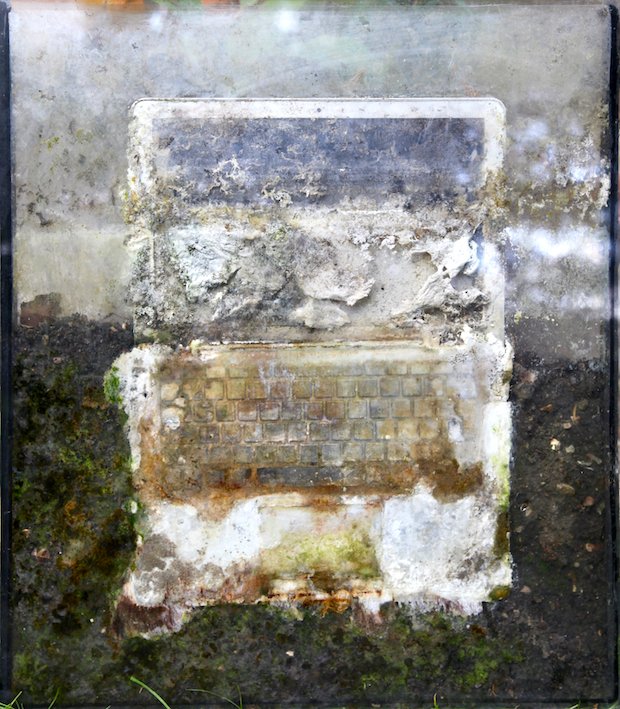
“Pergamon asks how our collective culture will be curated and preserved. Whether our tablets, corroded by time and soil, will be readable or open to reinterpretation by future civilisations?”
FURTHER DETAILS
Each culture leaves its remnants. The stone, ceramic and metal artefacts which allow historians to interpret its material culture, the people that created them and the beliefs and values they lived by.
As our world has become increasingly digitised, much of contemporary culture is digital and distributed as data files in hand-held tablets. Billions of tablets manufactured from many of the worlds rarest minerals. Minerals that come with a high cost of extraction, and if not recycled, are laid down in the stratigraphy of the Anthropocene as remnants from our own data and technology fuelled age.
The Pergamon series is named after the Ancient Greek city of Pergamon which held one of the most important libraries of the ancient world. The library is long lost but its stone Altar now resides in the Pergamon Museum, Berlin, where the series was conceived.
Works from the Pergamon series are acts of digital archeology. They are made from reclaimed tablets and buried in two-sided glass case allowing visitors to view the decay of our post digital culture as the tablets are reclaimed by nature. They ask how our digital culture will be curated and preserved. Whether our tablets, corroded by time and soil, will be readable or open to reinterpretation by future civilisations? Or, whether they will be rendered tabula rasa (blank slates), and through our shift to a fully virtual world, we are inadvertently walking into a digital dark age?
Pergamon II was created on the 3 June 2018 and is regularly photographed to record the passing of time, decay and plant growth.
AESTHETICA ART PRIZE
Animation for The Aesthetica Art Prize
EXHIBITONS
2022 | BBA Gallery Art Prize | Kühlhaus | Berlin
TALKS & EDUCATION
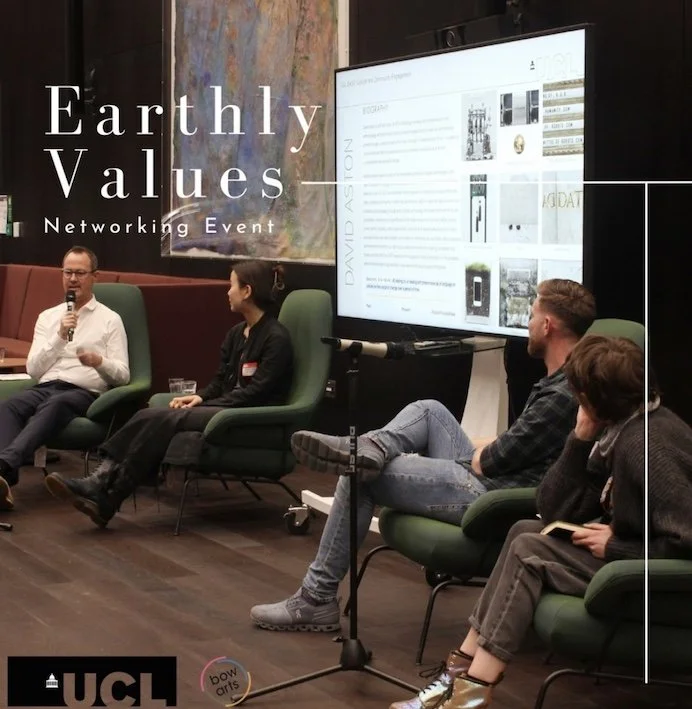
2024 | UCL East | Knowledge exchange lab
Earthly Values - Art, Research and Co-Existence with UCL East